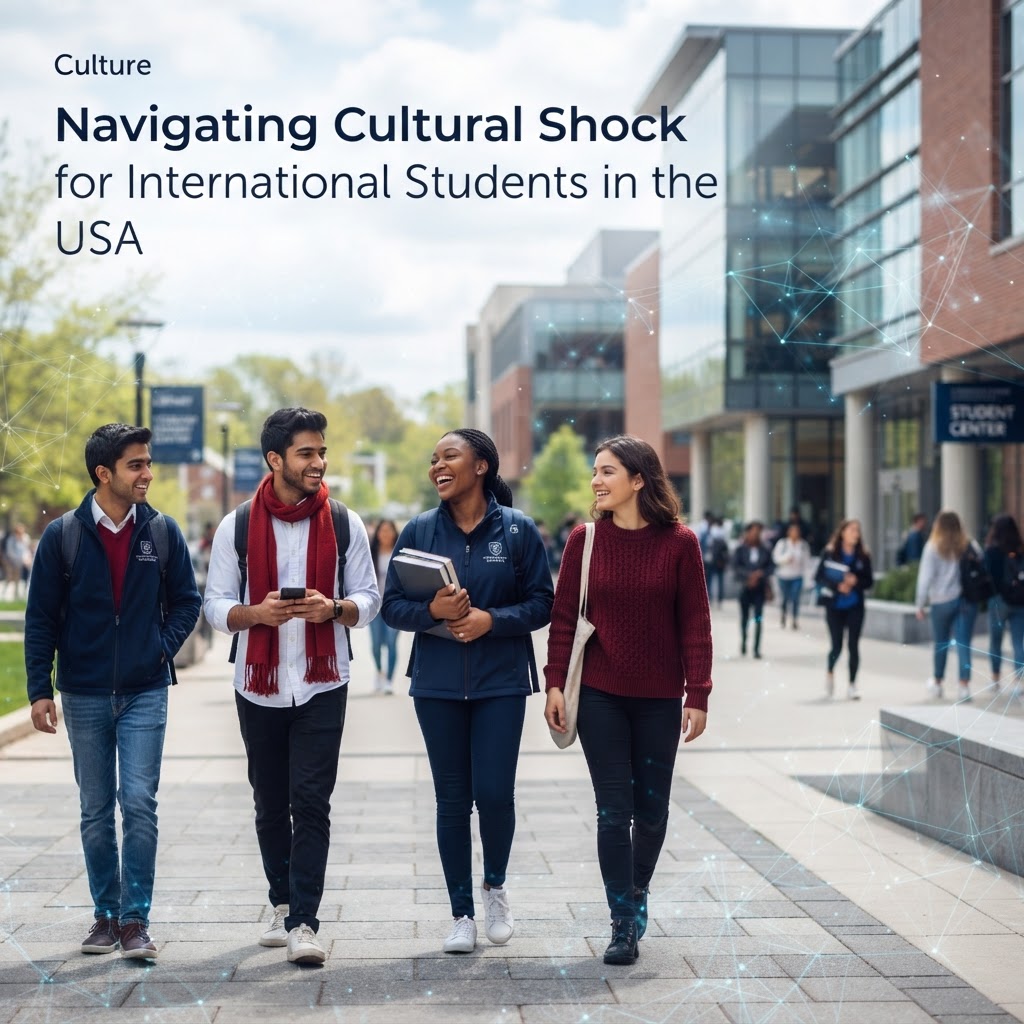
Understanding the Adjustment Phase
For many international students, the decision to study in the USA is driven by the promise of academic prestige and global networking. However, the excitement of arrival is frequently followed by a period of disorientation known as cultural shock for international students. Recognizing that these feelings are a natural part of the transition is the first step toward building a successful life abroad.
Why does cultural shock happen?
Culture shock is not a sign of weakness; it is a psychological reaction to leaving one's comfort zone. In the USA, students often encounter systems, communication styles, and social hierarchies that differ significantly from their home countries. Whether you are moving from a high-context culture like Japan or a collectivist society in Latin America, the individualistic nature of American campus life can feel jarring.
Common Cultural Shocks You Will Encounter
1. The American Classroom Dynamic
In many parts of the world, students are expected to listen quietly to professors. In the US, class participation is often a significant portion of your final grade. Professors encourage critical thinking, debate, and even respectful disagreement. If you are used to a lecture-based system, this can feel like an overwhelming challenge to your academic identity.
2. The Concept of Time and Punctuality
The US operates on a strictly time-oriented schedule. Being 'on time' often means being five minutes early. In academic and professional settings, late arrival is viewed as a sign of disrespect. Adapting to this rigid punctuality is often one of the first shifts students must make to maintain good standing with faculty and peers.
3. The 'Small Talk' Phenomenon
Americans are famous for their friendliness, but it often confuses newcomers. Casual questions like 'How are you?' or 'Let's grab coffee sometime' are often conversational filler rather than deep invitations. Understanding that this is a social lubricant, rather than a lack of sincerity, helps in building genuine connections over time.
4. Individualism vs. Collectivism
US culture celebrates the 'self-made' individual. For students coming from cultures where the family or community group is the primary unit of decision-making, this extreme focus on personal goals can feel isolating. It is important to find balance by joining student organizations that align with your values to create a supportive community.
How to Overcome Cultural Barriers
- Engage with Campus Organizations: Join international student clubs or department-specific associations to meet people who share your experiences.
- Practice Active Listening: Don't be afraid to ask for clarification when you don't understand an idiom or a social cue.
- Maintain Your Roots: Sharing your culture with others through food, music, or traditions is a powerful way to bridge the gap and feel proud of your heritage.
- Use Your University Resources: Most US universities offer counseling services specifically trained in supporting the unique needs of international students.
Cultural shock is a process of growth. It is the friction that polishes your adaptability, a skill that will be invaluable in your future career.
Ultimately, cultural shock is temporary. By staying open-minded and proactive, you will find that the challenges you face today become the stories of your success tomorrow. Godmode is here to help you navigate every step of your international education journey, from your first application to your graduation day.